
Neurological Rehabilitation Gym Adelaide
A dedicated space to practise movement, walking, balance, strength and everyday physical tasks.
Neurological rehabilitation often needs more than a treatment room.
Active Neuro’s dedicated neuro gym in Welland gives adults living with neurological conditions access to a purpose-built rehabilitation environment, supported by Physiotherapists and Exercise Physiologists.
From body-weight-supported walking and accessible strength equipment to balance training, cycling, stairs and rehabilitation technology, we can adapt the environment around your abilities and goals.
- WHY A NEURO GYM?
Rehabilitation needs room to move
If your goal involves walking, climbing stairs, improving balance, getting stronger or returning to exercise, you need opportunities to practise those activities.
That’s why Active Neuro has created a dedicated neurological rehabilitation gym.
Rather than being limited to a treatment bed and consultation room, our clinicians can select from different equipment and environments according to what you’re working towards.
That might mean:
- Practising walking with body-weight support
- Working between parallel bars
- Practising stairs
- Building strength using accessible resistance equipment
- Working on balance on different surfaces
- Developing cardiovascular fitness
- Practising reaction and coordination tasks
- Using visual feedback during rehabilitation
- Using virtual environments for selected rehabilitation activities
- WHAT CAN I WORK ON?
Your goals shape your rehabilitation
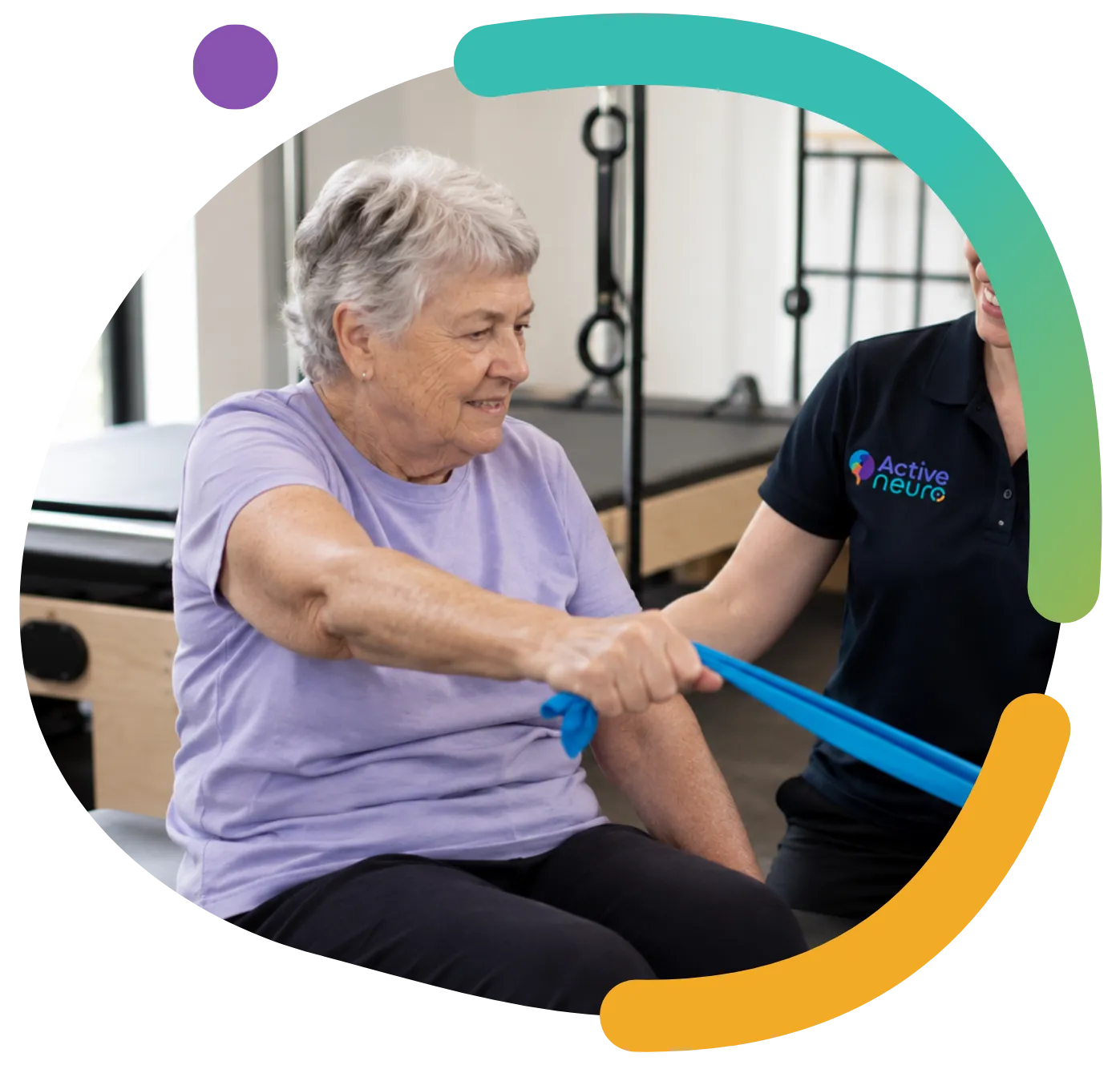
The Active Neuro gym can be used to work on areas including:
Walking & Gait
Practising stepping, walking, direction changes and other aspects of gait using the level of support appropriate to you.
Balance
Working on static and dynamic balance using different surfaces, positions and movement challenges.
Strength
Using accessible resistance equipment, weights and exercise bands to progressively work on strength.
Vestibular Rehabilitation
Specific equipment can provide visual feedback during selected head-movement, balance and vestibular rehabilitation activities.
Stairs
Practising stepping and stair-related activities using equipment that allows assistance to be adjusted.
Transfers
Working on movements such as sitting, standing and changing position where appropriate.
Coordination
Using targeted movement activities to challenge accuracy, timing and coordination.
Reaction
Visual and movement targets can be incorporated into selected exercises to challenge reaction and movement responses.
Functional Movement
Exercises can be selected around movements that relate to everyday activities and individual goals.
Cardiovascular Fitness
Cycling and other forms of exercise can be incorporated to work on endurance and physical capacity.
- SUPPORTED WALKING
Practising walking with the right level of support
Walking can be affected in different ways by stroke, brain injury, spinal cord injury, Parkinson’s disease, Multiple Sclerosis and other neurological conditions. Some people may require significant support. Others may need only a small amount of assistance while practising a particular movement. Active Neuro has several ways to modify the walking environment.
XY Ceiling Hoist + Walking Sling
Our overhead XY ceiling-hoist system can be used with a walking sling to provide body-weight support during selected rehabilitation activities. The system accommodates a range of body sizes, from paediatric through to adult equipment configurations, although Active Neuro provides services to adults. For suitable clients, body-weight support may allow the clinician to create a supported environment for practising activities such as standing and walking.
Body-Weight-Supported Treadmill
Our body-weight-supported treadmill provides another environment for gait practice. Support can be incorporated while a person practises repetitive stepping and walking under clinician supervision.
Electronic Height-Adjustable Parallel Bars
Parallel bars can provide upper-limb support during selected standing, walking, balance and mobility activities. Electronic height adjustment allows the setup to be adapted to the individual.
Body-Weight-Assisted Stairs
Stairs are an important part of everyday mobility for many people. Our body-weight-assisted stair setup allows clinicians to modify the environment while working on appropriate stepping and stair-related rehabilitation.
- WHY PRACTISE WALKING?
Walking is a skill as well as an exercise
Neurological conditions can change:
- Step length
- Walking speed
- Balance
- Coordination
- Weight transfer
- Endurance
- Confidence
- Ability to change direction
- Ability to manage different environments
Walking rehabilitation therefore isn’t simply about “getting your steps up.”
A Physiotherapist can assess how you are walking and select appropriate activities based on the difficulties identified.
Where suitable, equipment such as body-weight support, parallel bars or treadmill training may provide different ways to practise.
- Contact uS